WHEN DIPLOMACY MEETS DUE PROCESS: Public Office, Private Conduct and the Reputation of the State
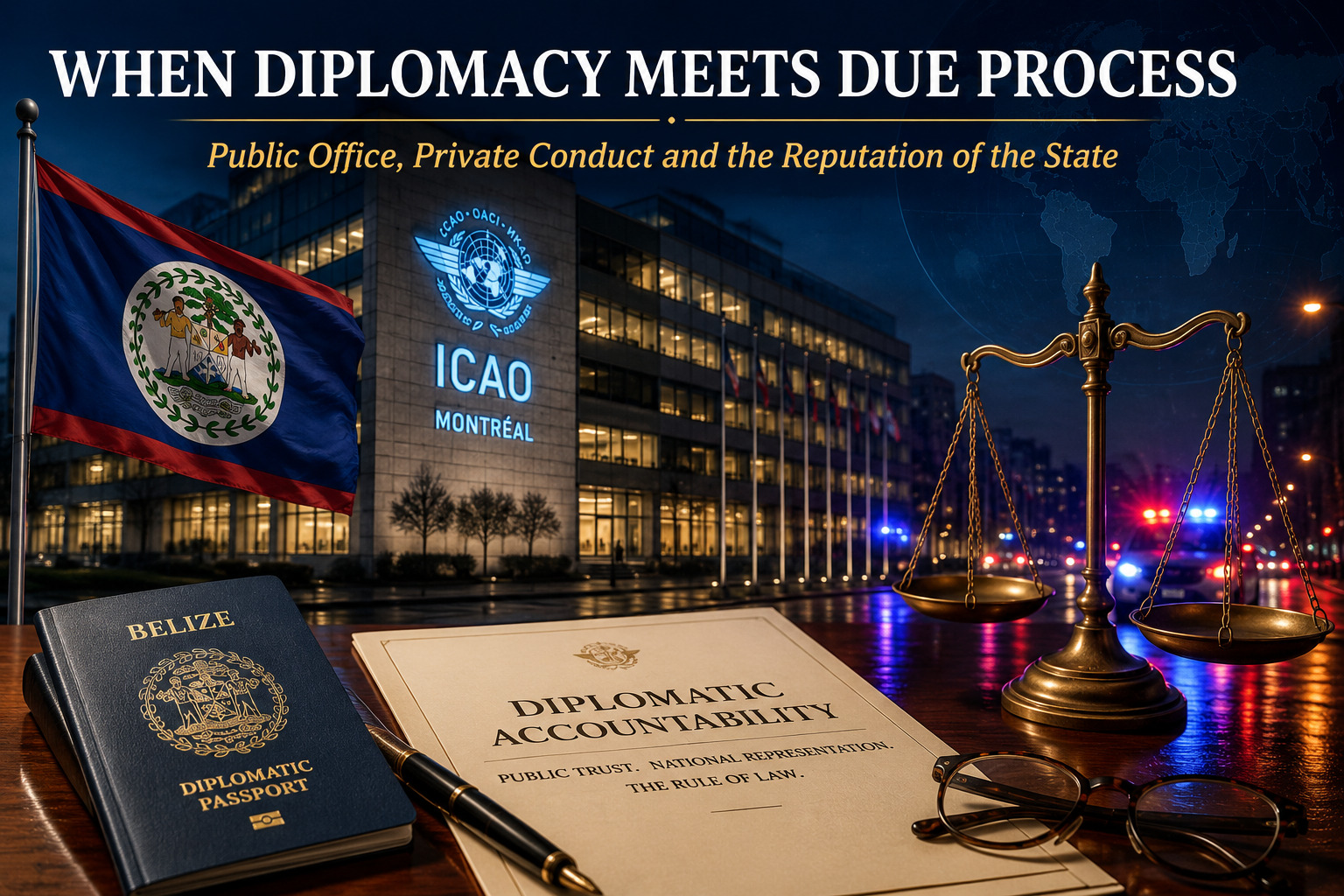
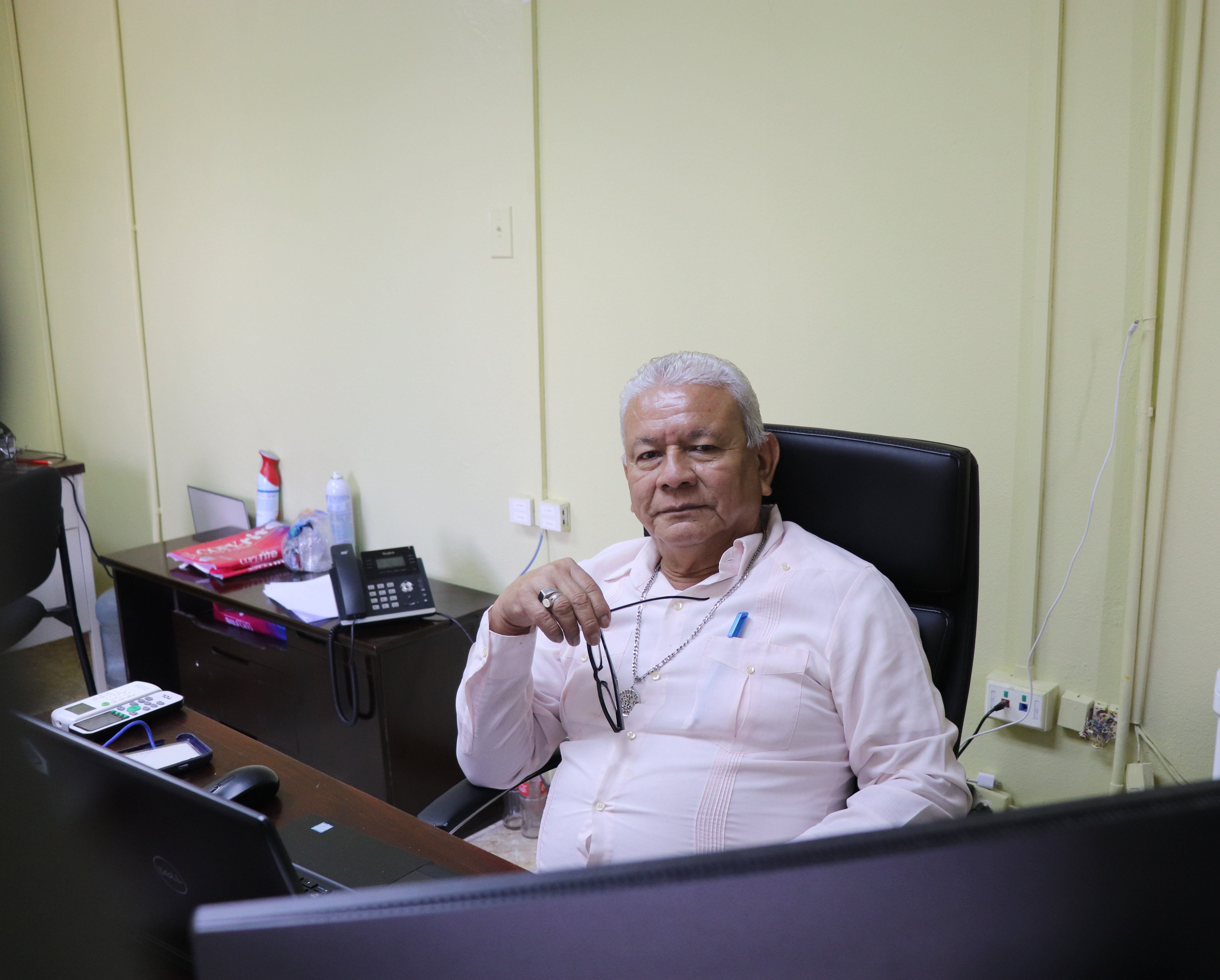
Belize City: Friday 31st July 2026:The reported detention of Belize's Permanent Representative to the International Civil Aviation Organization (ICAO), Kennedy Carrillo, by Canadian authorities has understandably attracted public attention. According to media reports, the detention followed a domestic dispute, and Belize's Ministry of Foreign Affairs is said to be communicating with Canadian authorities while seeking to establish the facts before determining whether any further action is warranted.
At this stage, the public should distinguish between what has been reported and what has been legally established.
Those are not the same.
A detention, questioning by police, or even an allegation of wrongdoing does not amount to a finding of guilt. Every person—including public officials and diplomats—is entitled to the protections afforded by due process and the presumption of innocence until the facts have been properly determined through the appropriate legal process.
That principle protects every Belizean.
But there is another principle that deserves equal attention.
It concerns public office.
REPRESENTING MORE THAN ONESELF
Diplomats occupy a unique position within government.
Unlike many public servants, they do not simply perform administrative duties.
They become the official face, voice and representative of the State before foreign governments and international organizations.
When Belize appointed Kennedy Carrillo as Permanent Representative to ICAO in Montreal, she ceased acting solely in her personal capacity during the performance of her diplomatic functions.
She represented Belize.
- Her conduct—whether official or personal where it affects public confidence—can inevitably have implications for the country's international reputation.
This is not unique to Belize.
- Every nation expects its diplomatic representatives to maintain standards consistent with the office they occupy because diplomacy is built not only on policy, but also on confidence and credibility.
THE DIFFERENCE BETWEEN A PRIVATE CITIZEN AND A DIPLOMAT
An ordinary citizen involved in a legal dispute abroad principally bears personal responsibility.
A diplomat occupies a different position.
- Foreign governments may distinguish between the individual and the State they represent, but public perception often does not.
News reports rarely stop at the individual's name.
- They identify the country.
The headline therefore becomes not merely about one person.
- It becomes about Belize.
That reality explains why ministries of foreign affairs around the world closely monitor incidents involving their diplomatic personnel.
WHAT SHOULD GOVERNMENT DO?
The Ministry of Foreign Affairs appears to have adopted the appropriate first step.
It has reportedly begun communicating with Canadian authorities to determine precisely what occurred.
That is how responsible governments should proceed.
Administrative decisions should be grounded in verified facts rather than speculation, social media commentary or political pressure.
Several outcomes remain possible.
Canadian authorities may determine that no criminal offence occurred.
Charges could be laid.
The matter could be resolved privately.
Or additional facts may emerge that significantly alter the public understanding of the incident.
Until those facts become known, restraint is not weakness.
It is responsible governance.
RECALL IS AN ADMINISTRATIVE DECISION—NOT A FINDING OF GUILT
Some have already questioned whether Belize should recall its representative.
That question deserves a careful distinction.
A government may decide to recall a diplomat for numerous reasons.
- Such a decision may reflect diplomatic prudence, reputational management, administrative confidence, or operational considerations.
- It does not necessarily constitute a declaration that the individual committed a criminal offence.
- Similarly, deciding not to recall the representative immediately does not imply that government condones misconduct.
- Both decisions require balancing due process with the responsibility to protect Belize's international standing.
BELIZE'S ICAO POSITION REMAINS SECURE
One important fact deserves clarification.
Belize's representation at ICAO belongs to the State—not to any individual officeholder.
- Should Government determine that another representative is appropriate, Belize's membership and seat on the ICAO Council would not automatically be affected.
Diplomatic appointments are institutional, not personal.
- That distinction is important because it separates the interests of Belize from those of any individual official.
THE REAL TEST OF GOVERNANCE
Perhaps the greatest test now is not Kennedy Carrillo.
It is the Government's response.
- Will it wait for verified facts?
- Will it communicate transparently with the Belizean public?
- Will any administrative action reflect established procedures rather than political expediency?
These are the questions that define institutional maturity.
- Governments are judged not merely by the crises they face, but by the principles they apply while managing them.
THE PRINCIPLE THAT MUST GUIDE US
Belizeans should resist two extremes.
One is rushing to condemn before the facts are known.
The other is dismissing legitimate public concern simply because an investigation is ongoing.
Neither serves justice.
- A mature democracy insists on both accountability and fairness.
- It recognizes that public office carries heightened responsibility while simultaneously protecting the legal rights of every individual.
Those principles are not contradictory.
They are complementary.
CONCLUSION
Whether this matter ultimately results in no further action, administrative measures, or legal proceedings will depend upon facts that are still emerging.
Until then, the focus should remain where it belongs—not on rumour or assumption, but on the conduct of institutions.
Because in the end, the measure of a democracy is not whether allegations arise against public officials.
The measure is whether its institutions respond with integrity, transparency, impartiality and respect for the rule of law.
- That is the standard Belize should expect.
- That is the standard Belize deserves.
By: Omar Silva – Editor/Publisher
NATIONAL PERSPECTIVE BELIZE
- Log in to post comments