Davos 2026 Drill-Down: Trade as a Weapon — and What It Means for Belize
By: Omar Silva – Editor/Publisher
National Perspective Belize – Digital 2026
Belize City: Tuesday 27th January 2026
Special Feature Analysis
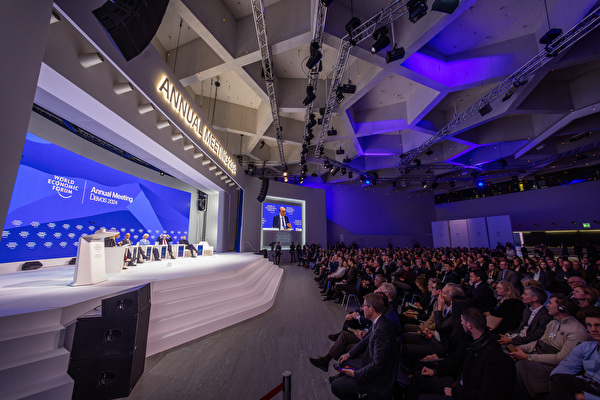
Davos 2026 didn’t treat trade as “economics” anymore. It treated trade as power: tariffs as punishment, market access as leverage, and supply chains as geopolitical terrain. The World Economic Forum hosted the conversation under the theme “A Spirit of Dialogue”—but the trade track revealed a harder truth: the rules-based system is being replaced by the deal-based system.
The core Davos message on trade
The clearest takeaway was captured bluntly by the WEF’s own trade summary: trade is changing, and Davos 2026 made that unavoidable—because tariffs are increasingly being used for non-economic objectives, shaking markets and rewriting assumptions businesses used to rely on.
The Good: What some countries are doing right
1) Partners are building “Plan B” trade routes (without the U.S.)
One practical response emerging from Davos is that major economies are trying to reduce over-dependence on the U.S. market by accelerating new trade pacts. That logic is already visible in real-time: the EU–India trade deal (announced right after Davos) slashes or eliminates tariffs on most goods traded by value, explicitly framed as strengthening trade resilience amid global tensions.
2) The conversation is finally honest about “trade risk”
Executives and officials repeatedly returned to the same demand: stability, predictability, and rule-of-law conditions for business. Reuters’ Davos takeaways captured that mood—trade anxiety is not abstract; it is now a boardroom constraint.
The Bad: The global system is normalizing coercion
1) Tariffs are no longer just tariffs
A defining Davos episode was the reported U.S. tariff threat tied to a geopolitical dispute (Greenland), and then a pullback after high-level talks. Even when a threat is withdrawn, the damage is done: markets and partners learn that access can be conditioned on political obedience.
2) “Friend-shoring” becomes bloc politics
Reuters described a “new trade map” forming in Davos: partners looking to expand commerce beyond the U.S. as tariffs become a foreign-policy tool. This is the architecture of a world where small states get pressured to “choose” lanes.
3) The outlook is cooling
The WTO’s latest outlook points to weaker global merchandise trade growth ahead (notably a softer 2026 projection than previously expected). That matters because when global trade slows, small import-dependent economies feel price shocks faster—and export opportunities shrink.
The Ugly: Belize’s danger zone — trade shocks in a peg-and-import economy
Belize sits in a vulnerable position: high import dependence, limited manufacturing depth, and a currency peg tied to a U.S.-anchored financial environment. In a world where tariffs are used as weapons and alliances “crumble,” smaller economies can become collateral damage.
Here’s what that looks like in practice:
1) Imported inflation is the silent tax
When trade routes get disrupted—tariffs, retaliations, shipping reroutes, “security” restrictions—Belize pays through higher landed costs: food, fuel-linked inputs, construction materials, medicines, spare parts. Davos made clear that uncertainty itself is now the price driver.
2) “Rules-based trade” weakens; small states lose protection
If the world drifts from rules toward raw bargaining, small states lose what little shield they had: predictable norms. Davos highlighted that trade measures are increasingly used for non-economic objectives—exactly the arena where small states have the least leverage.
3) Supply chains will reconfigure around power, not efficiency
The global trend now is resilience through bloc alignment—new corridors, preferred partners, strategic sourcing. This can lock Belize into higher-cost supply lanes unless we deliberately diversify and negotiate smarter.
The Belize Direction: What a serious national strategy looks like now
Davos 2026 isn’t a “conference story.” It is a warning light for Belize. If trade becomes coercion, Belize needs defensive capability and economic breathing room.
1) Diversify import sources, by policy—not by accident
Belize should not wait for shocks to “teach” diversification. The post-Davos scramble for non-U.S. corridors shows the direction of travel.
2) Build “shock absorbers”: strategic reserves + procurement discipline
If prices spike, a country with weak buffers becomes a hostage to the moment. Strategic reserves and smarter procurement are not luxuries in a tariff-war era.
3) Export strategy: value-added or permanent vulnerability
A small state must export more than raw inputs and low-margin products. The trade slowdown outlook makes this urgent: if global trade growth softens, competition intensifies, and only differentiated exports survive.
4) CARICOM/Central America: treat the region as a bargaining platform
Alone, Belize is a price taker. Regionally, Belize becomes part of a market and a negotiating bloc—useful in a world reorganizing around grouped leverage.
The blunt conclusion
Davos 2026 revealed that trade is no longer the bloodstream of globalization—it is becoming a pressure system. The “good” is that countries are building alternative corridors. The “bad” is that coercion is being normalized. The “ugly” is that import-dependent, small, pegged economies like Belize can be squeezed from every side unless we act deliberately and fast.
If you want, I can produce a companion blistering editorial titled: “When Trade Becomes a Weapon, Belize Can’t Afford Neutral Sleepwalking.”
- Log in to post comments