When Silence Becomes Complicity: The Caribbean, Cuba, and the Test of Regional Courage
By: Omar Silva – Editor/Publisher
National Perspective Belize – Digital 2026
Belize City: Wednesday 25th February 2026
For decades, when hurricanes tore through the Caribbean and hospital corridors grew thin with staff, help arrived without fanfare.
It arrived in white coats.
It arrived from Cuba.
Across the region — from Jamaica to Grenada, from Belize to Dominica — Cuban doctors staffed wards, filled ICU gaps, trained nurses, and stood shoulder-to-shoulder with Caribbean families during outbreaks and disasters. By mid-2020, over 600 Cuban medical professionals were deployed across Caribbean states during COVID-19, according to regional health reporting.
Now Cuba faces a deepening fuel and infrastructure crisis — blackouts, halted sanitation services, strained hospitals — and the regional voice has grown cautious, fragmented, restrained.
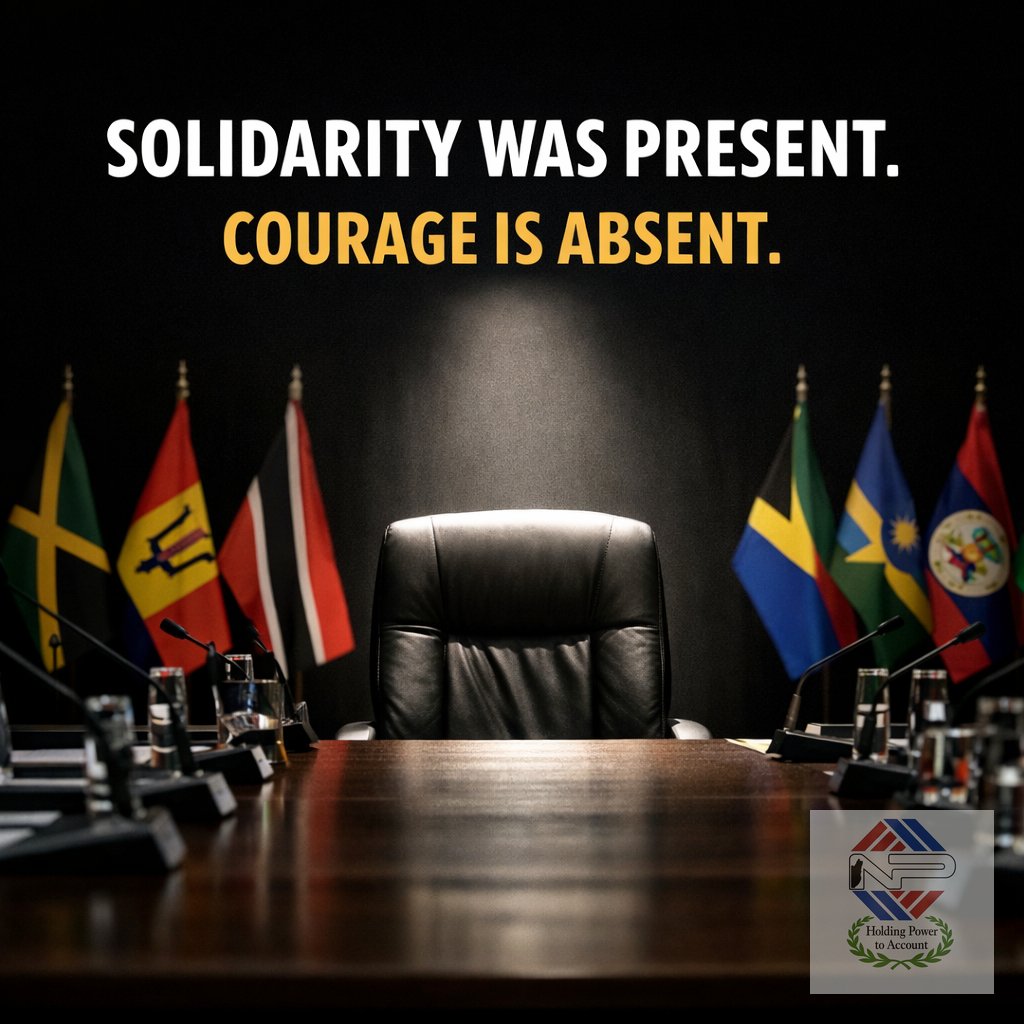
Silence speaks.
And it speaks loudly.
The Reality in Havana
Havana is not facing a “hard times” cycle. It is facing layered systems stress.
Fuel shortages have slowed garbage collection. Public transport is disrupted. Blackouts ripple through neighborhoods. Hospitals operate under strain.
This tightening crisis is being sharpened by new U.S. policy measures tied to oil shipments to Cuba — including a January 29, 2026 executive order authorizing tariff mechanisms against third countries engaged in fuel trade with Havana.
The mechanism is simple: discourage others from helping.
And it is working.
Mexico’s President Claudia Sheinbaum has publicly acknowledged halted oil shipments while her government weighs reprisal risk.
When third countries must calculate economic retaliation before sending fuel, that is not normal trade policy. That is geopolitical leverage applied through economic pressure.
Two Truths Must Be Held at Once
The Caribbean must not romanticize.
Cuba’s centralized political system has long drawn criticism — limited civic freedoms, economic rigidity, migration pressures, political repression. These realities exist.
But another truth also exists.
Cuba created the Henry Reeve International Medical Brigade, deploying medical teams globally in disasters and epidemics. Caribbean hospitals know those doctors not as ideology, but as colleagues.
A region that remembers who showed up cannot pretend amnesia now.
Why CARICOM Governments Are Quiet
Let us be honest about fear.
Caribbean economies are:
- Tourism-dependent
- Financially exposed to U.S. banking systems
- Remittance-linked
- Vulnerable to visa and trade policy shifts
Recent U.S. actions have included expanded visa restrictions tied to Cuban overseas medical programs. The message is unmistakable:
Cooperation with Cuba carries consequences.
Small economies calculate survival.
- But here is the uncomfortable truth: solidarity rarely survives if every nation calculates only short-term risk.
Belize’s Voice in the Debate
Belize has not been entirely silent.
- Prime Minister John Briceño expressed solidarity with the Cuban people and warned that reduced oil supplies could create a manufactured humanitarian disaster.
- Former Foreign Minister Assad Shoman went further, stating bluntly that if the squeeze succeeds, Cuban civilians will suffer and die.
That language is strong.
It reflects a deeper moral question:
- Is economic strangulation an acceptable tool of foreign policy when civilians bear the cost?
The Principle at Stake
This is not about endorsing Havana’s governance model.
This is about rejecting extraterritorial coercion as a tool used against small states.
Because today it is Cuba.
Tomorrow it could be any Caribbean state whose policy choices displease a larger power.
Regional sovereignty cannot be defended selectively.
- If CARICOM stands united when maritime borders are threatened, when climate financing is delayed, or when trade access is challenged — then it must also stand when a neighbor’s essential services are squeezed into collapse.
What Principled Solidarity Could Look Like
Without romanticizing Cuba’s system, CARICOM could:
- Issue a unified humanitarian declaration centered on civilian protection.
- Advocate for fuel access strictly for essential services: hospitals, water, sanitation.
- Oppose extraterritorial tariff mechanisms as precedent.
- Call for structured dialogue rather than economic escalation.
That is not ideological alignment.
That is regional maturity.
The Moral Ledger
Cuba’s medical diplomacy was never purely charity. It carried geopolitical meaning. It carried economic arrangements. It carried strategic interests.
But in Caribbean hospital wards, ideology was not what mattered.
Care was.
When Caribbean families remember who stood beside them during COVID-19 and hurricanes, they remember people — not policy theory.
That is why the silence now feels like abandonment.
A Hard Question for CARICOM
Are we a community of sovereign nations?
Or are we a collection of cautious administrations navigating fear one calculation at a time?
History will not remember tariff formulas.
It will remember whether small states defended each other when pressure mounted.
Closing Line
When white coats crossed the sea to save Caribbean lives, no one asked for ideological purity — only compassion. Now that compassion is being tested, and silence may become the loudest verdict of all.
- Log in to post comments