
BUDNA, THE STATE, AND THE SLOW UNRAVELING OF ACCOUNTABILITY
Why the Government’s Legal Strategy, Delays, and Contradictions Now Risk Defeat in Court — and in Public Trust
By: Omar Silva – Editor/Publisher
National Perspective Belize Investigations Desk
Belize City: Saturday 25th January 2026
What began as a shocking allegation — the kidnapping of a Belizean citizen and his cross-border handover to foreign authorities — has now matured into one of the most consequential constitutional confrontations in modern Belizean history.
The Joseph Ryan Budna case is no longer merely about one man’s abduction.
It is now about power, evidence, institutional credibility, and whether the State itself is subject to the Constitution.
A Confirmed Court Battle: November
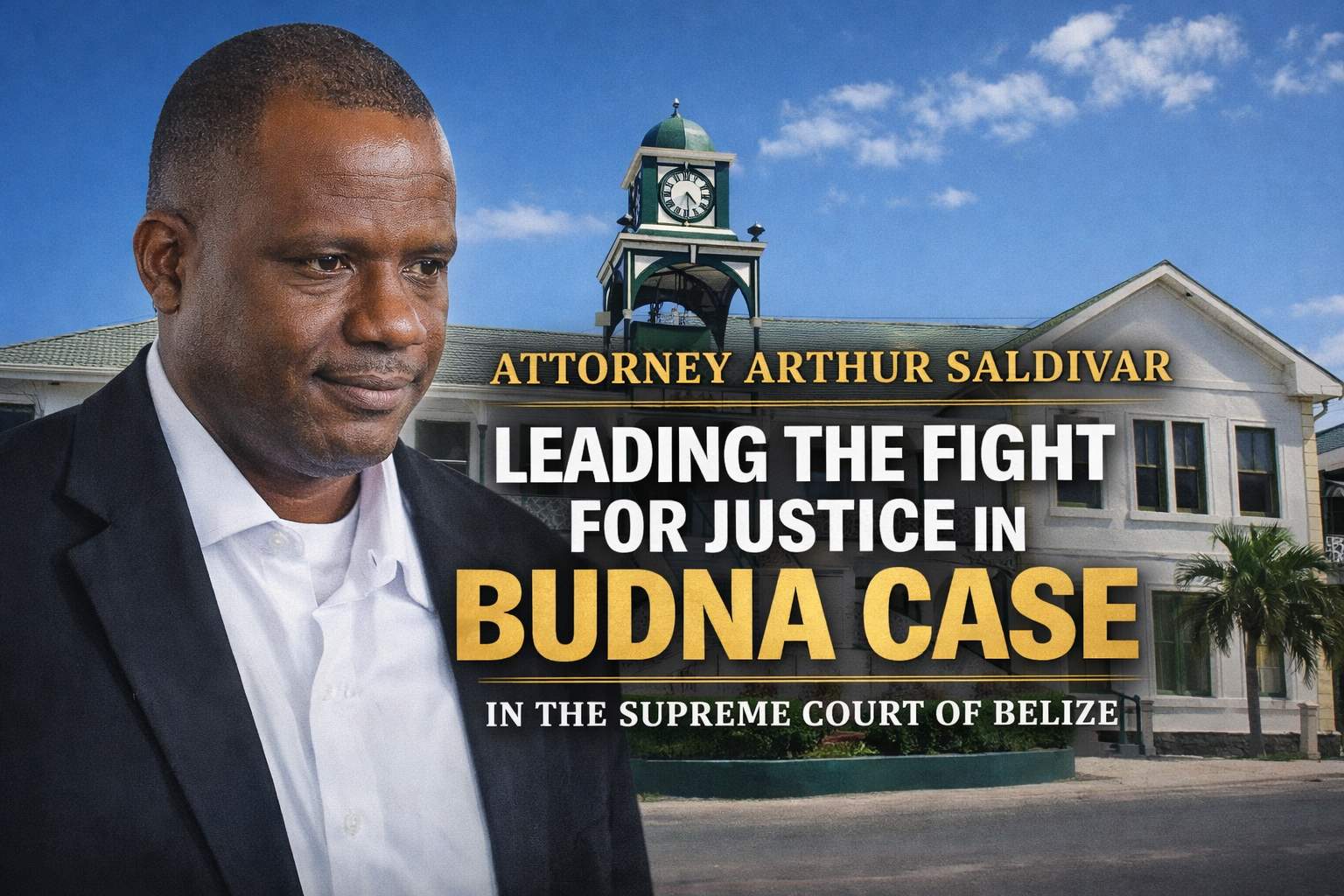
Attorney Arthur Saldivar, lead counsel for Budna, confirmed in November 2025 that the constitutional motion was expected to receive its initial hearing in November.
“His should be in court in November.”
- That motion alleges serious breaches of the Belize Constitution:
unlawful deprivation of liberty
- denial of due process
- cruel and degrading treatment
- and participation of state actors in an extrajudicial rendition.
Saldivar further confirmed that the legal team will apply under the Mutual Legal Assistance in Criminal Matters Act to have Budna temporarily returned to Belize for trial — likely to be housed at the Kolbe Foundation during proceedings.
“We make no demands. We make requests… there is an act that allows for cooperation, and we will apply under that framework.”
If the Government refuses, Saldivar indicated that “other measures” will be pursued.
More significantly, he revealed that the Association of Defense Attorneys has taken the case on principle:
“We see this as a major constitutional infraction… we have taken it upon ourselves to ensure the public recognizes there was a breach in the rule of law.”
The Core Reality the State Cannot Escape
The uncontested facts remain devastating:
- Budna was taken in Orange Walk
- Transported across Belize
- Passed police checkpoints without interception
- Crossed into Belizean Arenal
- Was delivered to Guatemalan police on the Guatemalan side of Arenal
- And a Belizean case file reportedly accompanied him
That sequence — if established in evidence — is not negligence.
It is state action.
Yet throughout this entire period, Commissioner of Police Dr. Richard Rosado publicly insisted that police were not involved.
That denial now sits uncomfortably beside video evidence, internal acknowledgments that officers were present, and the fact that one officer has been identified and placed on suspension.
Executive Interference Disguised as Oversight
The political handling of this matter has been just as troubling as the alleged crime itself.
Instead of allowing the Minister of Home Affairs to manage the response,
Prime Minister John Briceño personally overrode the process:
- He named the investigator himself
- Required the report be sent directly to him
- Promised an independent investigation
- Then quietly allowed the report to clear the Commissioner
- Reinstated Rosado the same day
- Promised Cabinet review
- Promised independent inquiry
- And to date, no independent investigation exists
This is not governance.
This is containment.
Even His Own Minister Didn’t Agree
What makes this worse is that Home Affairs Minister Kareem Musa publicly supported an independent investigation from the very beginning.
“Because of the interest of this case, in terms of openness and transparency, it warrants an independent investigation.”
He later agreed with proposals that a retired judge — someone beyond intimidation, beyond political influence — should lead such an inquiry.
That path was never taken.
Instead, the Prime Minister suggested that the file should merely go to the DPP, returning the matter to the same police ecosystem already implicated.
When pressed by reporters, the Prime Minister responded sarcastically:
“What do you want us to do? Bring the FBI?”
That flippant remark will age poorly when placed beside constitutional pleadings and evidentiary records.
Why the State Has Hired Heavy Legal Artillery
The Attorney General has now confirmed that the Government has retained a private senior counsel because the case names officials personally.
That decision reveals the State’s true concern:
This is no longer about clearing the facts.
It is about controlling exposure.
The Government’s legal strategy appears aimed at:
- Removing ministers and officers as named defendants
- Arguing only the AG should be sued
- Limiting discovery obligations
- Restricting access to CCTV originals
- Preventing disclosure of phone logs, checkpoint books, radio traffic
- Avoiding forensic scrutiny of evidence custody
Not disproving the allegations — but constraining the battlefield.
Why Courts Do Not Like “Strike-Out First” Tactics
Constitutional litigation follows a well-known pattern:
Pleadings → Case Management → Disclosure → Witness Statements → Hearing
Trying to strike out the case before disclosure is premature. Courts know that serious rights violations must be tested against evidence, not press statements.
And the evidence pressure points are obvious:
- Original CCTV exports (with metadata and hashes)
- Checkpoint logs
- Occurrence books
- Radio dispatch records
- Police phone records
- Vehicle movement data
- Border entries
- Guatemala’s official arrest documentation
If any of this evidence is missing, altered, delayed, or partially disclosed, the court can draw adverse inferences against the State.
That means: higher damages, harsher findings, reputational damage.
The Risk the State Created for Itself
- By centralizing control…
- By delaying transparency…
- By promising independence and failing to deliver…
- By reinstating officials before disclosure…
- By withholding original evidence…
The Government has not protected itself.
It has boxed itself in.
- Courts take a dim view of evidence that disappears.
- Courts punish delay.
- Courts punish stonewalling.
- Courts punish appearances of bias.
This is not politics anymore.
This is constitutional exposure.
Why the “There Were Other Legal Options” Argument Matters
Even if the State wanted Budna removed from Belize, lawful options existed:
- Formal extradition procedures
- Diplomatic coordination
- Court-supervised transfer
- Embassy involvement
Choosing a clandestine cross-border handover (if proven) is legally reckless and constitutionally fatal.
Courts punish unnecessary violations of rights far more harshly than technical errors.
The Only Path Back to Credibility
If the Government is serious about justice — not optics — three actions must happen immediately:
- A formal litigation hold on all CCTV, devices, logs, and records
- Court-supervised disclosure of all originals with forensic integrity
- A Commission of Inquiry under Cap. 127, chaired by a retired judge, with subpoena power and public proceedings
Anything less will be seen — rightly — as evasion.
The Real Issue Before the Court
- This case is not about whether Budna is liked or disliked.
- It is not about his personality.
- It is not about social media.
It is about this question:
- Did agents of the Belizean State violate the Constitution and attempt to bury the evidence afterward?
Courts exist precisely for moments like this.
Bottom Line
- Hiring heavyweight lawyers does not erase missing evidence.
- Reinstating officials does not cure constitutional breaches.
- Delays do not protect the State — they compound its liability.
- And centralizing control while denying transparency only deepens suspicion.
The State now faces two trials:
- One in the courtroom
- One in the conscience of the Belizean people
And both are approaching fast.
- Log in to post comments