
ROSADO STEPS ASIDE: WHAT DOES IT MEAN FOR BELIZE’S DEFENCE AT THE ICJ?

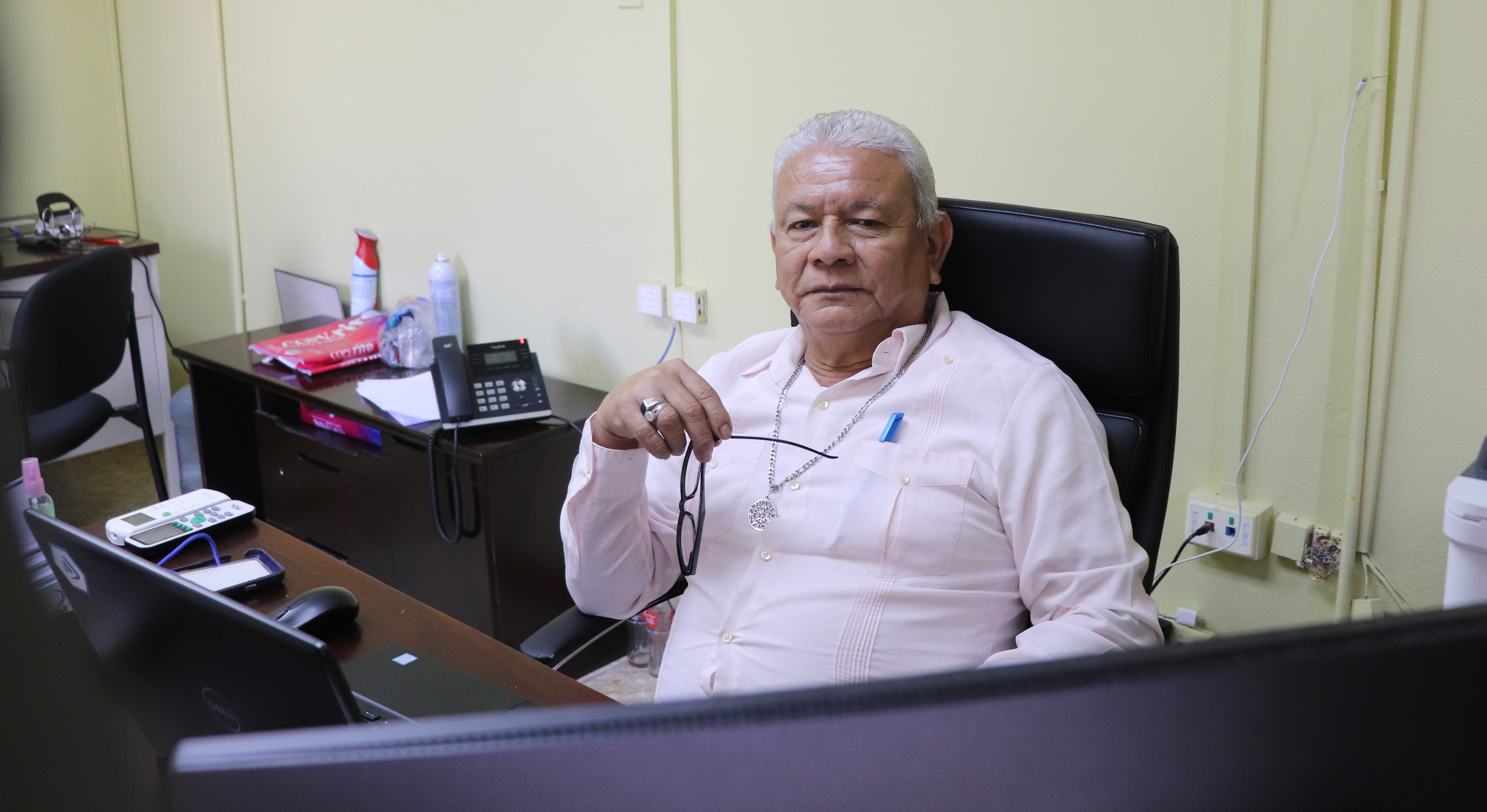
Two territorial cases, two sets of arguments and one urgent national question: is Belize’s legal team ready for the road ahead?
Belize City: Tuesday 27th October 2026: Belize is approaching one of the most consequential moments in its history: the oral hearings before the International Court of Justice on territorial questions involving Guatemala and Honduras.
- Now, with those hearings only months away, Ambassador Alexis Rosado has resigned as Belize’s Co-Agent before the Court.
The Government of Belize says the country’s written submissions have been filed and that the cases will continue under the leadership of Ambassador Assad Shoman, Belize’s Agent, and the legal team. It has expressed confidence in the continuity of Belize’s representation.
- That assurance is important. But Belizeans deserve to understand what it means in practical terms.
What did a Co-Agent contribute to the architecture of Belize’s defense? What work remains before the hearings? Could Guatemala or Honduras take advantage of a transition within Belize’s team? And what safeguards are in place to protect Belize’s position?
- These questions concern the preparedness of the State of Belize and the future of every Belizean.
First, where do the cases stand?
- There are two separate cases before the International Court of Justice, commonly known as the ICJ. They are related by geography and some overlapping interests, but they are not the same legal proceeding.
Case
What is before the Court
Previously announced hearing dates
Guatemala/Belize
Guatemala’s territorial, insular and maritime claim against Belize
22–26 February 2027
Belize v. Honduras
Sovereignty over the Sapodilla Cayes; Guatemala is permitted to intervene as a non-party on a limited issue
1–5 March 2027
- Guatemala’s Ministry of Foreign Affairs announced those dates in September. The Court’s schedule should continue to be checked for any subsequent change. prensa.gob.gt
The first case concerns Guatemala’s claim against Belize. In the second, Belize brought proceedings against Honduras concerning sovereignty over the Sapodilla Cayes.
- In March 2026, the ICJ permitted Guatemala to intervene in the Belize–Honduras case as a non-party. According to Belize’s government, that intervention is limited to the question of sovereignty over the Cayes, including fishing rights in surrounding waters. It does not make Guatemala a full party to that case. pressoffice.gov.bz
That distinction matters. Guatemala can present its permitted position in the Sapodilla proceedings, but the scope of its intervention is governed by the Court’s decision. Its broader dispute with Belize remains before the Court in the separate Guatemala/Belize case.
What is an Agent—and what does a Co-Agent do?
- At the ICJ, countries do not simply send a lawyer to deliver a speech. A state assembles a team to develop and present its legal position, manage the relationship with the Court and coordinate the work that supports its arguments.
The Agent is the state’s formal representative before the Court. Belize appointed Ambassador Assad Shoman to that role. A Co-Agent assists in the state’s representation and the organization of the case. Belize appointed Ambassador Rosado as Co-Agent in both proceedings. api.icj-cij.org
- A case of this kind can require the coordination of historical research, treaties, maps, diplomatic correspondence, legal analysis and responses to another state’s arguments. The team must also decide how to present complex material clearly and consistently.
- That does not mean every task was performed personally by Rosado. The public record available to National Perspective Belize does not establish a complete breakdown of his individual responsibilities. Nor should his contribution be presented as the work of one person alone: Shoman, Belizean representatives, international counsel, researchers and support personnel are part of the broader effort.
What is documented is that Rosado was more than a name on a letterhead. In 2023, Belize’s government reported that Shoman and Rosado delivered Belize’s rejoinder—the country’s final written pleading in the scheduled written exchange in the Guatemala case—to the Court. www.pressoffice.gov.bz
- And just days before Rosado’s resignation, Foreign Minister Francis Fonseca told reporters that Shoman considered his Co-Agent’s continued participation important to the ongoing work. Fonseca specifically referred to further research and the need to prepare for and respond to arguments. www.7newsbelize.com
- Those statements make the question of continuity unavoidable.
The written submissions are filed. Is the work finished?
No. The written phase is a foundation; the oral hearings are the next stage of presenting and testing the case.
The government says Belize’s written submissions have been filed. That means the country’s written case is already before the Court. It does not mean that the team can simply arrive in The Hague and read it aloud.
In preparation for the hearings, counsel may need to:
- Identify the most important points in the written record and present them within the allotted time.
- Examine the other side’s arguments and prepare responses.
- Ensure that historical documents, maps and legal authorities are accurately understood and readily available.
- Coordinate the speakers and maintain a consistent position across the two related proceedings.
- Prepare to answer questions from judges and respond to points raised during the hearings.
- The Court’s procedures govern what can be presented, when it can be presented and how the parties may respond. An oral hearing is therefore both an opportunity to explain the case and a test of the team’s preparation. api.icj-cij.org
- This is why the loss of a senior team member shortly before the hearings deserves a serious explanation, even though the written submissions remain on file.
Does Rosado’s resignation invalidate Belize’s case?
No. His resignation does not automatically invalidate Belize’s written pleadings, end the cases, or transfer any territory to another state.
- Belize is the state participating in the proceedings. Its legal position does not belong personally to its Co-Agent. Shoman remains Agent, and the government says the legal team continues its work.
- Nor does the resignation automatically postpone the hearings. At the time of this report, National Perspective Belize has not identified an announcement that the Court has changed the published dates because of this development.
- A change to the schedule would be a procedural matter for the Court. It should not be assumed either that Belize will request a postponement or that one would be granted.
Where could a practical opening arise?
- Here, Belizeans need a careful distinction.
- An opening is not the same thing as an established advantage. There is no public evidence available to us that Rosado’s resignation has already weakened Belize’s legal position or that either neighboring country has gained a legal right because of it.
- But the timing creates questions about how Belize will manage risks that can arise when an experienced senior representative leaves.
1. Knowledge and continuity
Rosado’s years of involvement may have given him familiarity with the history of the dispute, the documentary record, diplomatic exchanges and decisions made during the preparation of the cases.
If important knowledge or unfinished work is concentrated in one person, the remaining team must ensure it is properly transferred. If that knowledge is already shared and documented, the transition may be manageable.
What the public does not know: How much of Rosado’s work is documented and shared, what duties remained before the hearings, and who has assumed them.
2. The ability to respond quickly
At oral hearings, legal teams listen carefully to their counterparts and prepare responses within the Court’s schedule. A team under pressure must be able to find the relevant document, identify the issue and agree on a response.
A change in personnel could make that task harder if it creates gaps in coordination or leaves too much work with too few people. On the other hand, a well-prepared team with shared access to the record can reduce that risk.
What the public does not know: Whether Belize has completed a handover and whether additional personnel or other support are needed.
3. Consistency between the two cases
The cases are separate, but the Sapodilla Cayes and the interests of Guatemala, Belize and Honduras create points of overlap. Belize’s representatives must be clear about what they argue in each proceeding and why.
A poorly coordinated team could risk confusion or apparent inconsistency. That is a general litigation risk—not a finding that Belize’s positions are inconsistent.
What the public does not know: Who is responsible for coordinating the preparation across both cases following Rosado’s departure.
4. Pressure on the remaining leadership
Shoman remains Agent. International counsel and Belizean representatives remain part of the broader effort. But a departure can increase the demands on those who remain.
The question is not whether one person can be described as irreplaceable. It is whether the team has enough time, people and organized knowledge to carry its responsibilities through both hearings.
Could Guatemala capitalize on the situation?
Guatemala’s legal team will be expected to pursue its own country’s position vigorously. In the Guatemala/Belize case, it can present arguments within the proceedings and seek to persuade the judges that its interpretation of the relevant facts and law should prevail.
- If Belize’s preparation were disrupted, Guatemala could benefit indirectly—for example, if Belize failed to respond effectively to an argument, overlooked a relevant document, or presented its position less clearly than it otherwise could have.
- But those are conditional possibilities. We do not know that any such weakness exists.
Guatemala does not acquire a new territorial right simply because Belize changes a member of its team. Nor can the resignation itself establish that Guatemala’s claim is legally correct. The Court must consider the cases before it under international law.
- There is also a political dimension. Officials, commentators or media outside Belize could portray a change in representation as a sign of uncertainty. Such a narrative would not change the evidence before the ICJ, but it could affect public perceptions. Belize can limit uncertainty by explaining its preparations clearly without disclosing confidential strategy.
What about Honduras and the Sapodilla Cayes?
The Belize–Honduras case brings a different combination of interests.
Belize is the applicant. Honduras is the other party. Guatemala is permitted to intervene as a non-party, within the scope allowed by the Court.
- Honduras can advance its position on sovereignty in the case, and Guatemala can make its permitted submissions concerning its legal interests. Belize’s team must be prepared to address both, while respecting the fact that their procedural roles are different.
- Could Honduras benefit from disruption in Belize’s preparation? In practical terms, potentially, if a disruption affected Belize’s ability to present or respond effectively. But again, no such effect has been demonstrated merely by the resignation.
- Could Guatemala use its intervention to expand the case into anything it chooses? Its intervention is limited by the Court’s ruling. The precise arguments the Court will ultimately consider must be judged against the permitted scope and the positions presented during the proceedings. pressoffice.gov.bz
The central concern for Belize is that the team be prepared to address the legal positions of both Honduras and Guatemala in the Sapodilla proceedings, while also presenting Belize’s case in the separate Guatemala/Belize dispute.
What about new evidence or unexpected arguments?
- A common fear is that another country could suddenly introduce new material and catch Belize unprepared.
- The ICJ’s rules regulate the introduction of documents and the conduct of oral proceedings. Parties cannot simply disregard those rules, but the Court has procedural powers and may have to rule on issues that arise. Judges can also ask questions. api.icj-cij.org
- That is precisely why a legal team must prepare for more than a fixed script. It must understand the written record, anticipate opposing arguments and be ready to respond within the framework established by the Court.
There is no verified information before us that Guatemala or Honduras has introduced a new document or procedural application as a result of Rosado’s resignation. Belizeans should watch for actual court orders and official announcements rather than assume that such a move has occurred.
The questions the government should answer.
- The public does not need access to confidential legal advice, draft speeches or sensitive strategy. But it can reasonably expect answers about the organization of Belize’s representation.
National Perspective Belize puts the following questions to the Government of Belize and the Office of the Agent:
- What responsibilities did Ambassador Rosado hold in the preparation of each case, and who has assumed them?
- Has a formal handover of his files, outstanding work and relevant institutional knowledge taken place?
- Will Belize appoint another Co-Agent? If not, how will those responsibilities be covered?
- Does Rosado’s resignation as Co-Agent end all involvement with the ICJ team, or will he continue in any advisory capacity?
- Has the ICJ Registry been formally informed of the change in Belize’s representation in both proceedings?
- Has Ambassador Shoman assessed whether the existing team has sufficient personnel and resources to complete preparations on schedule?
- Does Belize anticipate seeking any adjustment to the announced hearing dates—or is the team proceeding on the existing schedule?
- How is the government ensuring coordination between the Guatemala/Belize case and the separate Sapodilla Cayes case?
- Will the government provide Belizeans with a public update on the composition of the team and the next procedural steps?
These questions do not ask Belize to reveal its legal hand. They ask the government to explain how the hand is being prepared.
A national responsibility beyond personalities
- This issue reaches beyond any one official, administration or political party. The proceedings concern Belize’s territorial and maritime interests, the Sapodilla Cayes, and the legal future of disputes that have occupied generations.
- Ambassador Rosado’s resignation is a change in personnel. Its significance will depend on what responsibilities he held, how they are transferred, and how effectively Belize’s remaining team prepares and presents its case.
The government’s statement provides an assurance. The next step is to make that assurance meaningful to the Belizean people.
- Who is doing the work? Who has inherited the responsibilities? Is the team ready for two hearings involving three countries?
- Belizeans do not need to be frightened into believing that a resignation has already compromised their sovereignty. They do need enough reliable information to understand how their country is defending it.
National Perspective Belize welcomes a response from the Government of Belize, Ambassador Assad Shoman and the Office of the Agent.
By: Omar Silva – Editorial Director @ www.nationalperspectivebz.com ®
National Perspective Belize ®
- Log in to post comments
