Breaking the Fuel Chain: How Belize Can Escape the Middleman Trap and Reclaim Its Energy Future
Breaking the Fuel Chain: How Belize Can Escape the Middleman Trap and Reclaim Its Energy Future
By: Omar Silva I Editor/Publisher
NATIONAL PERSPECTIVE SPECIAL FEATURE
Belize City: Monday 30th March 2026
🇲🇽 A Door Just Across the Border
Just across Belize’s northern border lies a reality few Belizeans fully grasp.
Mexico—through PEMEX and under the policy direction of Secretaría de Energía (Mexico)—is not merely a consumer of fuel. It is a producer, refiner, and regional energy actor.
With the development of the Dos Bocas refinery in Tabasco and expanded Gulf Coast logistics, Mexico now sits in a position to supply refined petroleum products across the region.
And Belize?
Belize sits next door—yet remains structurally distant from that supply.
⛽ The System Belize Built — and Now Suffers From
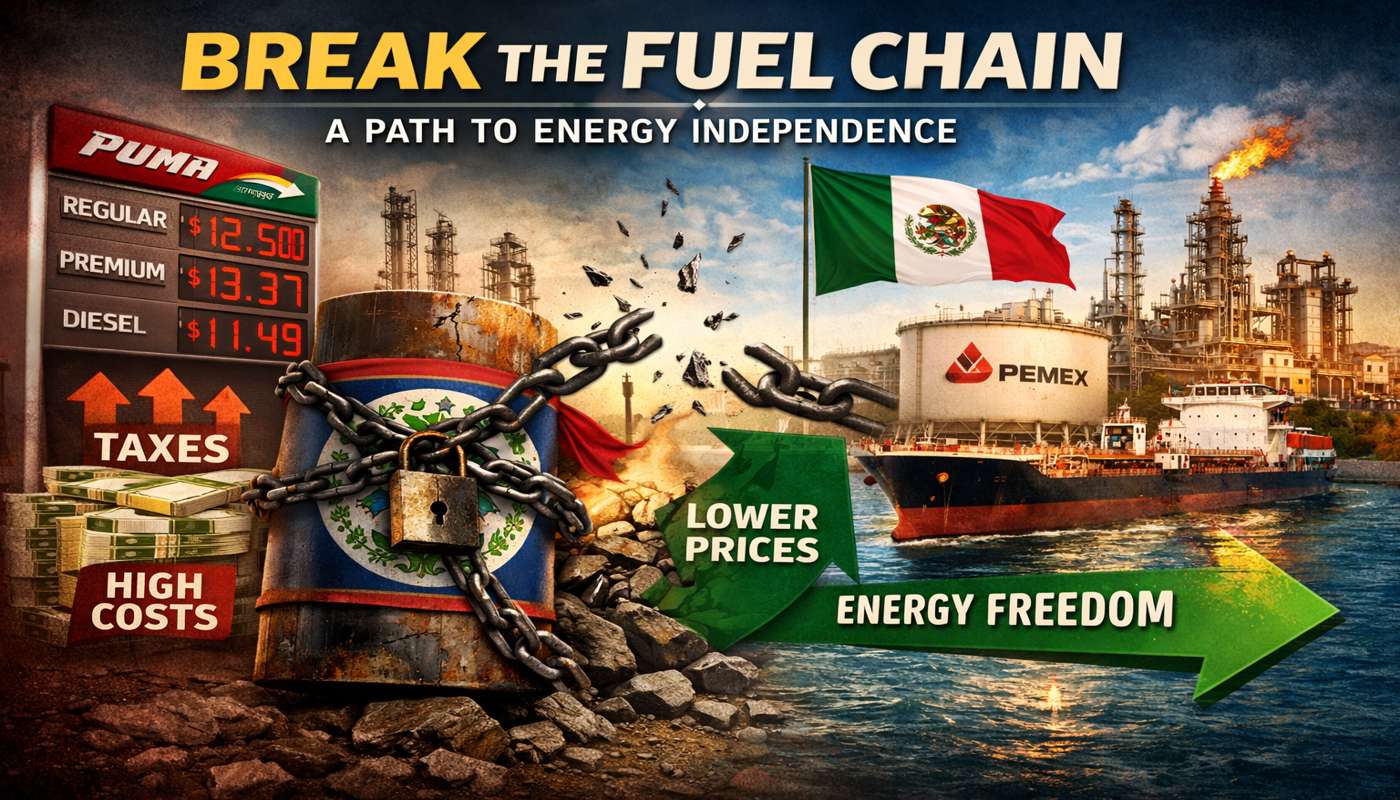
Belize’s fuel reality is not accidental. It is engineered.
The country relies heavily on a single dominant importer—PUMA Energy—which controls:
- Import logistics
- Storage infrastructure
- Wholesale distribution
This structure has created what can only be described as a middleman-dependent fuel economy.
By the time fuel reaches the pump, the price includes:
- International acquisition costs
- Freight and insurance
- Importer margins
- Storage and distribution markups
- Government taxes layered at multiple points
The result is a compounding effect.
Fuel in Belize is not just expensive—it is structurally inflated.
💰 Taxing the Engine of the Economy
Here lies the deeper contradiction.
Fuel is not just a commodity. It is the engine of the entire economy:
- Transport
- Agriculture
- Fisheries
- Construction
- Small business operations
Yet it is also one of the government’s most reliable revenue streams.
Through duties, GST, and other charges, the state extracts significant income from every gallon consumed.
This creates a policy paradox:
- Lower fuel prices → economic relief
- Lower fuel prices → reduced government revenue
And so, reform stalls.
⚖️ The Alternative Exists — But Requires Political Will
The path forward is not theoretical. It is practical.
1. Government-to-Government Energy Agreement
Belize can engage Mexico directly through a bilateral framework:
- Negotiation with Secretaría de Energía (Mexico)
- Supply guaranteed through PEMEX
- Pricing indexed to transparent benchmarks
This model removes layers of intermediaries and introduces predictability into pricing.
2. A National Fuel Import Authority
Belize can restructure the market:
- Government imports fuel directly
- Private companies (including PUMA) operate as logistics providers
This shifts power from price-setting intermediaries to national oversight.
3. Liberalized Direct Import Licensing
Opening the market to:
- Local importers
- Cooperatives
- Industry groups
…would introduce competition and break structural dependency.
🚧 The Barriers No One Wants to Confront
Let us speak plainly.
Entrenched Commercial Interests
The current system benefits those who control:
- Storage
- Distribution
- Long-term contracts
Any shift threatens established profit structures.
Government Revenue Dependence
Fuel taxation is deeply embedded in national revenue.
Reducing it requires:
- Fiscal restructuring
- Alternative revenue streams
- Political courage
Infrastructure Control
Storage facilities and distribution networks are not easily replaced.
Any reform must address who controls the tanks, the terminals, and the trucks.
🌎 Lessons from the Region
Belize is not alone—but it is behind.
- The Dominican Republic negotiates bulk fuel agreements while allowing private distribution
- Jamaica’s Petrojam model anchors state participation in energy imports
- Mexico maintains strategic control through state energy policy
These models demonstrate one truth:
👉 Energy sovereignty is not accidental—it is designed.
🔥 The Strategic Opportunity Belize Cannot Ignore
This is bigger than fuel.
A restructured energy framework would ripple across the economy:
- Lower transportation costs
- Reduced food prices
- Improved business margins
- Enhanced national competitiveness
In short:
👉 Fuel reform is economic reform.
🧭 A Roadmap Out of the Quagmire
Immediate (0–6 months):
- Cabinet mandate for bilateral engagement with Mexico
- Initiation of diplomatic and technical discussions
Medium Term (6–18 months):
- Pilot fuel import program from Mexico
- Regulatory adjustments for market restructuring
Long Term (2–5 years):
- National fuel authority or hybrid model
- Regional energy integration strategy
⚡ Final Word: The Illusion Must End
Belize is often told that high fuel prices are inevitable.
They are not.
They are the result of:
- Structural dependency
- Policy design
- Lack of negotiation
The truth is stark:
👉 Belize is not paying for fuel.
👉 Belize is paying for a system that keeps it dependent.
And just across the border, the alternative is already in motion.
National Perspective Belize
Where Analysis Meets Accountability
- Log in to post comments