“Beyond the Budget Circus: A New Economic Horizon for Belize”
Why Belize Must Break from Colonial Economics and Build Markets That Work for Its People
By: Omar Silva I Editor/Publisher
National Perspective Belize – Digital 2026
Belize City: Sunday 22nd March 2026
📰 SUNDAY FEATURE PUBLICATION
🔻 INTRODUCTION: THE THEATER OF NUMBERS
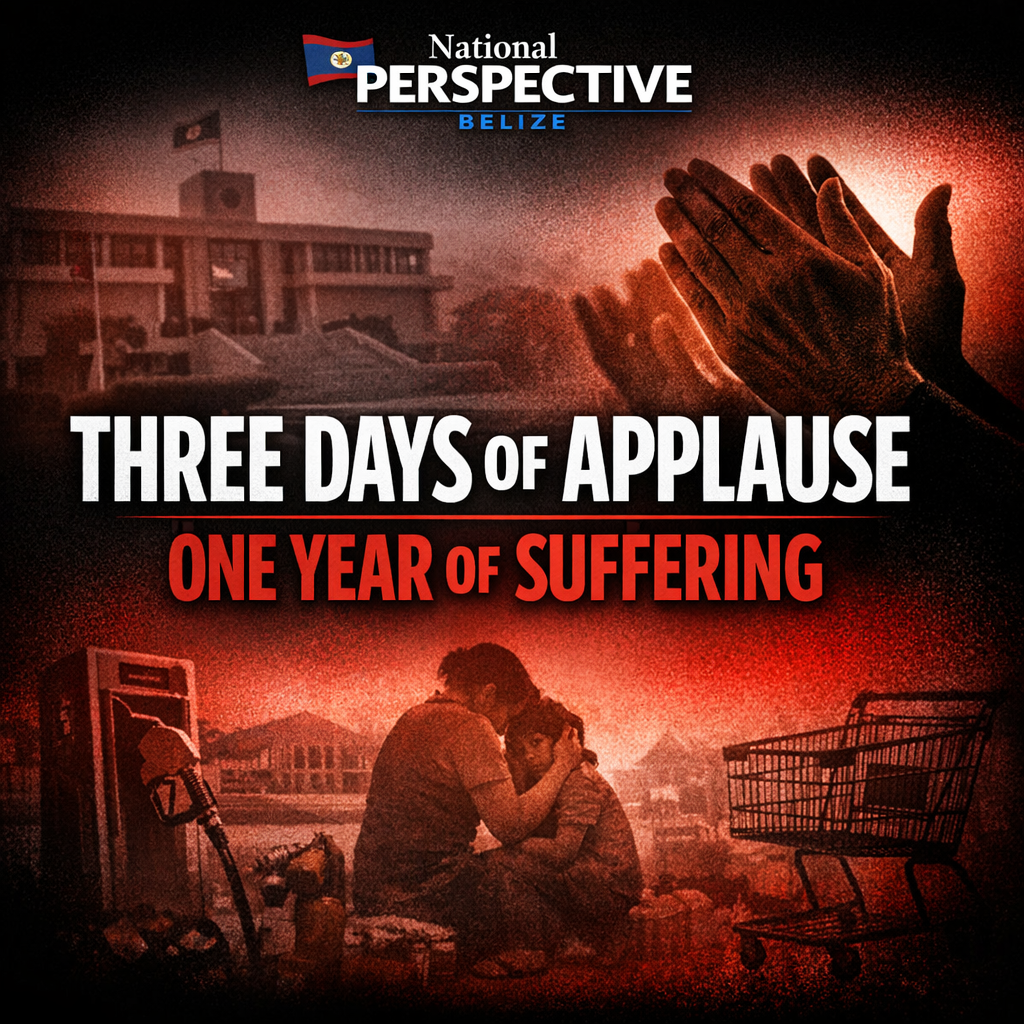
As Belize prepares for yet another national budget debate, the country finds itself trapped in a familiar spectacle—one where numbers are paraded, applause is orchestrated, and outcomes are predetermined.
With a Parliament overwhelmingly dominated by 26 members of the People’s United Party (PUP) against a fragmented Opposition, the so-called “debate” risks becoming little more than political theater.
But beyond the applause and rehearsed justifications lies a deeper and more urgent question:
👉 Is Belize budgeting for survival—or planning for transformation?
Because what is presented as fiscal management today continues to operate within a framework inherited from the past—a colonial economic model that extracts, imports, and depends.
And that model, by design, does not build nations.
🔻 THE COLONIAL ECONOMIC MODEL: A SYSTEM THAT LIMITS BELIZE
For decades, Belize has remained locked into a structure where:
- Raw materials are exported with minimal value added
- Finished goods are imported at higher cost
- Energy is largely dependent on external sources
- National wealth is concentrated in non-productive sectors
- Economic policy responds to external pressures rather than internal vision
This is not accidental.
It is the lingering architecture of a colonial economy—one that conditions nations to remain producers of raw value and consumers of finished wealth.
👉 And every budget that fails to challenge this structure only reinforces it.
🔻 THE MISSED OPPORTUNITY: BUDGETS WITHOUT TRANSFORMATION
Budgets in Belize have become instruments of:
- Short-term relief
- Political appeasement
- Recurrent expenditure expansion
But rarely do they function as tools of:
- Industrial development
- Market creation
- National capital formation
Instead of asking “How do we grow?”, the current approach continues to ask:
👉 “How do we manage what little we have?”
That is not leadership.
That is maintenance.
🔻 A NEW HORIZON: BUILDING MARKETS, NOT MANAGING SCARCITY
If Belize is to move forward, it must abandon the illusion that growth will come from consumption, borrowing, or external dependency.
The future lies in deliberate market creation.
Not waiting for investors.
Not relying on tourism alone.
But building systems that produce, process, and compete.
🔷 1. AGRO-INDUSTRIAL TRANSFORMATION: FROM FARM TO FACTORY
Belize’s agricultural wealth remains largely underutilized.
Instead of exporting raw sugar, citrus, and produce, the country must invest in:
- Food processing industries
- Ethanol and biofuel production
- Agro-based manufacturing
👉 Every product exported raw is a missed opportunity for jobs, revenue, and industrial growth.
🔷 2. BELIZE AS A REGIONAL TRADE GATEWAY
Belize’s geography is not a limitation—it is a strategic advantage.
Positioned between CARICOM and Central America, Belize can become:
- A logistics and distribution hub
- A re-export center
- A bridge between Spanish and English-speaking markets
👉 The question is not whether Belize is small.
👉 The question is whether Belize is thinking small.
🔷 3. LIGHT MANUFACTURING: PRODUCING WHAT WE CONSUME
From basic construction materials to packaged goods, Belize imports what it can—and should—produce.
A national push toward light manufacturing would:
- Reduce import dependency
- Create jobs across multiple skill levels
- Retain capital within the domestic economy
🔷 4. ENERGY AS A DEVELOPMENT TOOL, NOT A BURDEN
High energy costs continue to suffocate productivity.
Belize must transition toward:
- Renewable energy integration
- Biomass utilization from agricultural waste
- Industrial energy zones with reduced costs
👉 Without affordable energy, there can be no competitive economy.
🔷 5. LAND FOR PRODUCTION, NOT SPECULATION
Land in Belize must serve the nation—not sit idle for speculation.
A forward-looking policy would:
- Incentivize productive use of land
- Link land ownership to economic contribution
- Support agro-industrial and manufacturing development
🔷 6. NATIONAL CAPITAL FOR NATIONAL DEVELOPMENT
Foreign investment has its place—but it cannot be the foundation of national growth.
Belize must begin building its own capital base through:
- Pension-backed development funds
- Diaspora investment instruments
- Strategic public-private partnerships
👉 Wealth must circulate within Belize—not continuously flow outward.
🔷 7. SKILLS FOR PRODUCTION, NOT JUST EMPLOYMENT
The education system must be aligned with national development goals.
Technical training must focus on:
- Manufacturing skills
- Agro-processing
- Renewable energy technologies
- Industrial operations
👉 A nation that trains its people to produce builds its future.
🔻 THE FUTURE IS A CHOICE
Belize stands at a crossroads.
One path continues the cycle:
Budget → Borrow → Spend → Repeat
The other path demands courage:
Produce → Process → Compete → Grow
🔥 CONCLUSION: BEYOND APPLAUSE, TOWARD TRANSFORMATION
As the government prepares to present its budget, Belizeans must look beyond the performance and ask:
👉 Where is the transformation?
👉 Where is the plan to build markets?
👉 Where is the future?
Because a nation cannot applaud its way into prosperity.
It must build it.
⚖️ FINAL WORD
There is, however, an emerging consciousness—one that refuses to accept stagnation as destiny.
A consciousness that understands:
👉 Belize does not lack resources—it lacks a system that transforms resources into markets.
And within that understanding lies something powerful:
👉 The realization that the future of Belize will not be given. It must be built.
- Log in to post comments